More Farmers Are Enrolling in Crop Insurance Due to Extreme Heat
💡 What’s the story?
Farmers in the United States can enroll in a federal insurance program to protect themselves from crop damages caused by drought, heat waves, and other forms of extreme weather. With extreme weather events increasing due to climate change, so too are enrollments in the Federal Crop Insurance Program.
A new paper by researchers at Resources for the Future (RFF) finds that a decline in crop yield due to extreme heat boosts insurance enrollment for corn and soybeans the following year. Increased insurance take-up, in turn, helps rural economies by protecting jobs that could otherwise be at risk due to extreme heat, including in sectors that aren’t directly related to farming.
However, as temperatures climb due to climate change, the team estimates that the higher enrollments will increase annual program costs by about $79.7 million by 2050 for corn and soy.
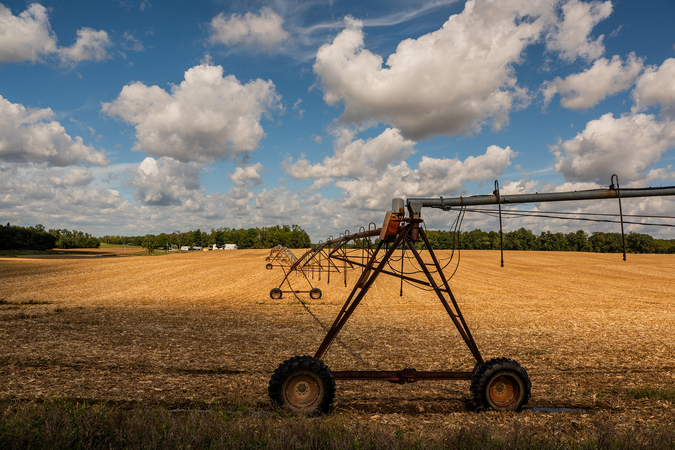
🚜 What does extreme heat mean for the Federal Crop Insurance Program?
The Federal Crop Insurance Program is the single largest form of federal support for US farmers. The program offers protection against natural disasters and fluctuations in crop prices. Currently, the federal government subsidizes over 60 percent of the premiums. Almost 300 million acres of cropland in the United States are enrolled in the program, a figure that has grown alongside program costs over the past few decades.
The new analysis shows that counties that experienced lower corn and soybean yields due to high temperatures enrolled significantly more acres in the program the following year. A 10 percent decline in crop yield due to extreme heat increases insured corn and soybean acreage by 4.9 percent and 3.4 percent, respectively, the following year. Over the next two and a half decades, projected temperature rise could increase the amount of corn enrolled in the program by 2.7 million acres (3.5 percent) on average, and soy enrollment could jump by 5.9 million acres (8.4 percent) on average.
The analysis shows that enrolling millions of additional acres in the program due to extreme heat could raise annual program costs by about $41.6 million for corn (a 3.7 percent increase) and $38.1 million for soy (a 9 percent increase) by 2050. These cost estimates do not include the climate-related payouts to already-enrolled acres.
🏘️ What does the Federal Crop Insurance Program mean for rural economies?
The Federal Crop Insurance Program offers significant economic protection to farmers at a cost of approximately $14 billion per year. Program enrollment substantially mitigates the adverse effects of extreme heat on rural labor and protects jobs directly related to agriculture, although jobs in retail, hospitality, healthcare, and other sectors also benefit greatly from the economic stability the program offers. The largest benefits occur in places where extreme heat and high enrollment rates coincide, such as the Coastal Plain region of eastern Texas.
Between 2015 and 2019, the program preserved about 95,000 rural jobs annually from extreme heat with an average program cost of $53,230 per job, with 5,400 of these jobs otherwise being lost for climate-driven reasons. By midcentury, the program could preserve about 50,000 jobs that would otherwise be lost due to climate change.
Expert Perspective
“Our analysis shows that farmers see insurance as a way to protect against rising risk, which can go a long way in protecting rural livelihoods. But the program is expensive. It represents a substantial and growing share of Farm Bill spending and is expected to cost taxpayers about $156 billion over the next decade. As policymakers debate the Farm Bill in Congress, there’s an opportunity here to look at the program and assess how to account for—and perhaps mitigate—some of the expected cost increases.”
—Yanjun (Penny) Liao, RFF Fellow
📚 Where can I learn more?
For more information and methodology, read the working paper “Managing Heat Risk: Crop Insurance and Rural Economic Resilience” by RFF Fellow Yanjun (Penny) Liao, California Institute of Technology Assistant Professor and RFF University Fellow Hannah Druckenmiller, and RFF Senior Fellow Margaret Walls.
Resources for the Future (RFF) is an independent, nonprofit research institution in Washington, DC. Its mission is to improve environmental, energy, and natural resource decisions through impartial economic research and policy engagement. RFF is committed to being the most widely trusted source of research insights and policy solutions leading to a healthy environment and a thriving economy.
Unless otherwise stated, the views expressed here are those of the individual authors and may differ from those of other RFF experts, its officers, or its directors. RFF does not take positions on specific legislative proposals.
For more information, please see our media resources page or contact Media Relations and Communications Manager Annie Tastet.