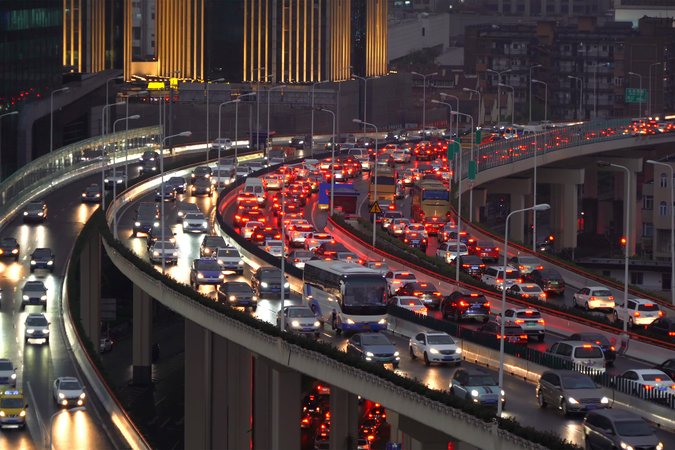
Will a Driving Restriction Policy Reduce Car Trips?
DownloadA driving restriction policy, as a control-and-command rationing measure, is a politically acceptable policy tool to address traffic congestion and air pollution in some countries and cities. Beijing was the first city in China to implement this policy. A one-day-a-week driving restriction scheme was expected to take 20 percent of cars off the road every weekday. Using household survey and travel diary data, we analyze the short-term effect of the driving restriction policy on individual mode choice. The data also allow us to identify which demographic groups are more likely to break the rules. The estimates reveal that the restriction policy in Beijing does not have a significant influence on individual driving choices, as compared with its influence on public transit. The rule-breaking behavior is constant and pervasive. We found that 47.8 percent of the regulated car owners didn’t follow the rules and drove “illegally” to their destinations. On average, car owners who traveled during peak hours or for work trips, and those whose destinations were farther away from the city center or subway stations, were more likely to break the rules.
Authors

Lanlan Wang
Jintao Xu
Xinye Zheng
Ping Qin